Last week's edition struck a nerve. The concept of GenAI as the front door triggered an immediate scramble across the industry. There is a massive gap between knowing a technology is important and realizing exactly where you stand relative to the competition. Last week closed that gap. The urgency became real, sparking over 20 intense conversations on my calendar with CMOs, CDOs, CIOs, and CTOs, all wrestling with the exact same realization.
That level of alignment across the C-suite is a powerful signal. This is the exact friction point where competitive advantage will be won or lost. Today's edition doubles down to look past the hype and dissect exactly what happens next.
When I pressed publish on the 876,000 piece, I expected the usual rhythm. Some engagement, a few good replies, maybe a coffee conversation or two. In addition to the 20+ conversations, by Friday ninety-six emails sat in the inbox. Every message asked some version of the same question.
If AI agents are the next discovery layer, where do we actually stand right now? Are we ready? What does ready even mean?
The answer turns out to be measurable. A clear snapshot of how 35 major U.S. financial brands present themselves to the AI agents that consumers are increasingly using to shop for cards, checking, savings, investing, and mortgage. I looked for the current products available for FIs to monitor and find out, but: either I wasn't in agreement with the methodology and framework, or they were just outright bad. So I decided to build my own Agent Readiness Index, especially since I had spent so much time trying to find a good one and, in the process, ended up with a fundamental understanding of how it works.
The brand an agent can read becomes the brand a customer hears about.
Across 35 U.S. FIs scored on every consumer product surface, five brands rose to the top of their categories. Each one earns its position through consistency across every product page they ship.
Wealthfront brings consistent agent readability to every product surface. Rates are written into the page. Frequently asked questions live in structured form across cash, investing, and lending. The site explicitly welcomes AI crawlers. A clear model of what agent-ready looks like end to end.
Capital One treats agents as a first-class distribution channel. AI crawlers are explicitly welcomed in the site policy. Rates appear in page titles. Consumer product surfaces score consistently above 78, with the same discipline showing up on cards, checking, and savings.
Citizens demonstrates what schema craftsmanship looks like at scale. Frequently asked questions, step-by-step answers, and structured product detail show up across every surface. Mortgage leads the category at 85 with a depth of agent-readable content that compounds.
BECU brings a level of customer service discipline that translates beautifully to the agent layer. Cash Back Visa applies the same structured approach as the Contact page, and member trust signals stack cleanly across surfaces.
First Horizon delivers consistent server rendering across every hub page. Mortgage is a standout surface, with calculators and a clear path to a loan officer rendered in a form an agent can summarize and quote directly.
Understanding what a citation is helps you understand 85 percent of the Agent Readiness concept.
When a consumer asks Claude or ChatGPT or Perplexity to recommend a high yield savings account, the AI returns one to three named recommendations. It picks those names by reading the actual websites of the banks it is considering, pulling out the rates and fees and terms, comparing them, and selecting which brand to surface. When the AI names your brand in its answer, that is a citation. When the AI leaves your brand out, your brand sits outside the consideration set entirely.
The list of brands an AI cites for any given query is shorter than the first page of Google has ever been. The first cited brand captures most of the consideration. The second captures the bulk of what is left. The third gets a mention. The fourth and below sit outside the agent's answer.
Citation share is the new share of voice. It is measurable today. It is shifting today. And it favors the brand that is easiest to read.
The first cited brand captures most of the consideration. The fourth and below sit outside the agent's answer.
Capital One leads the Top 10 Banks because the team made specific decisions about how the website presents itself to non-human visitors. The human-facing homepage looks like every other large bank homepage. The agent-facing version looks completely different.
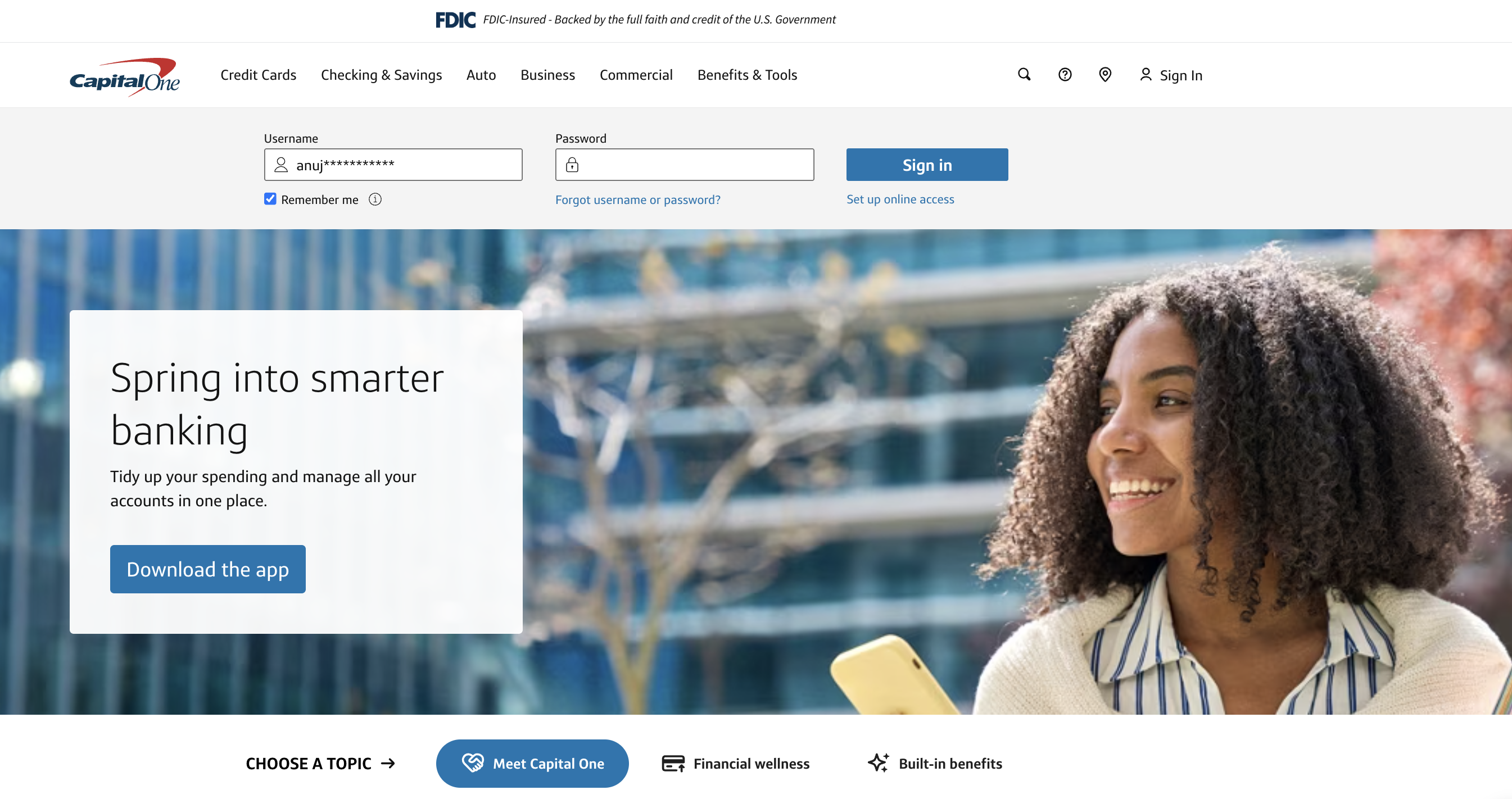
// What the AI agent reads at capitalone.com

title:
  "Capital One | Credit Cards, Checking,
  Savings & Auto Loans"

robots.txt:
  User-agent: ClaudeBot     Allow: /
  User-agent: GPTBot        Allow: /
  User-agent: PerplexityBot Allow: /

product taxonomy:
  - Credit Cards
  - Checking
  - Savings  // "High-Yield Rate" in title
  - Auto Loans

FDIC banner rendered server-side
AI crawlers welcomed by name
Rates published in page titles
Frequently asked questions structured
Five winners earn the spotlight. Thirty more brands sit behind them. Here is the full picture, organized by category.
Every brand in the index has a full deep dive. Every score traces back to specific surfaces and signals. The complete library lives on the Competitive Compass website.