
For thirty years, the consumer asked a single thing: which credit card should I get? They felt a need, looked around, compared the offers, weighed the rewards and the rate, then applied and waited. The whole business of cards was built to win that one moment.
I think that question is changing, and I want to walk you through why, and what I believe you should do about it. A customer with a money decision now turns to an assistant, as we covered last week in The Answer Economy, and asks what only the new way can answer: which card do I actually need, for the life I have?
When the question changes, everything built to answer the old one has to move.
This is my read, and it is the read the industry keeps asking me for, so I am going to give it to you straight. We are early; the map is still being drawn, and that is exactly why I believe the moment rewards the leaders who ask the sharpest questions. Right now, the questions matter more than the answers. Welcome to the brave new world.
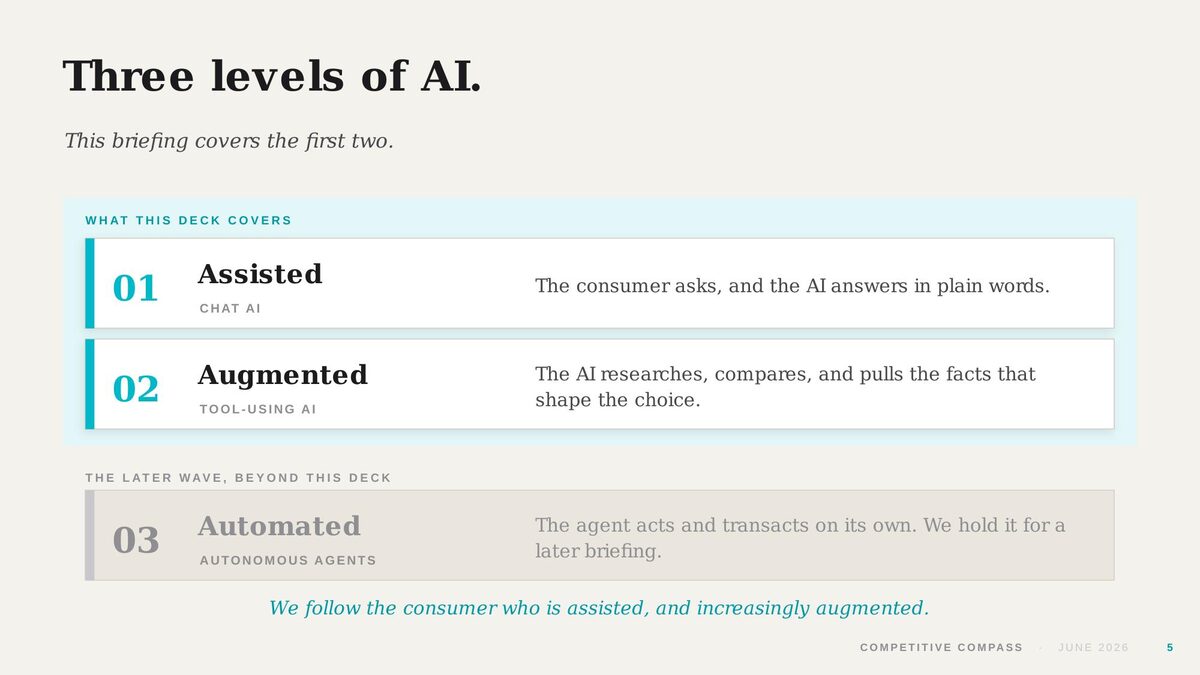
One note before I start, so we stay grounded. I draw a hard line at the autonomous agent that spends on its own. I think that arrives later, well past this planning horizon. The shift I am describing here is the consumer who asks a machine and acts on the answer, the first two levels above, and that shift is already underway.
Here is the most useful thing I can give you this week. Look at what happened to recorded music. Revenue fell from about thirty-nine billion dollars to a low of about eighteen billion, then climbed back above thirty-two billion. The market reshaped, then grew. The value moved to whoever asked the bigger question. I keep coming back to the way Benedict Evans framed it: the loser asked, “What if I no longer have to buy a CD?” and the winner asked, “What if I can get all the music there is?”
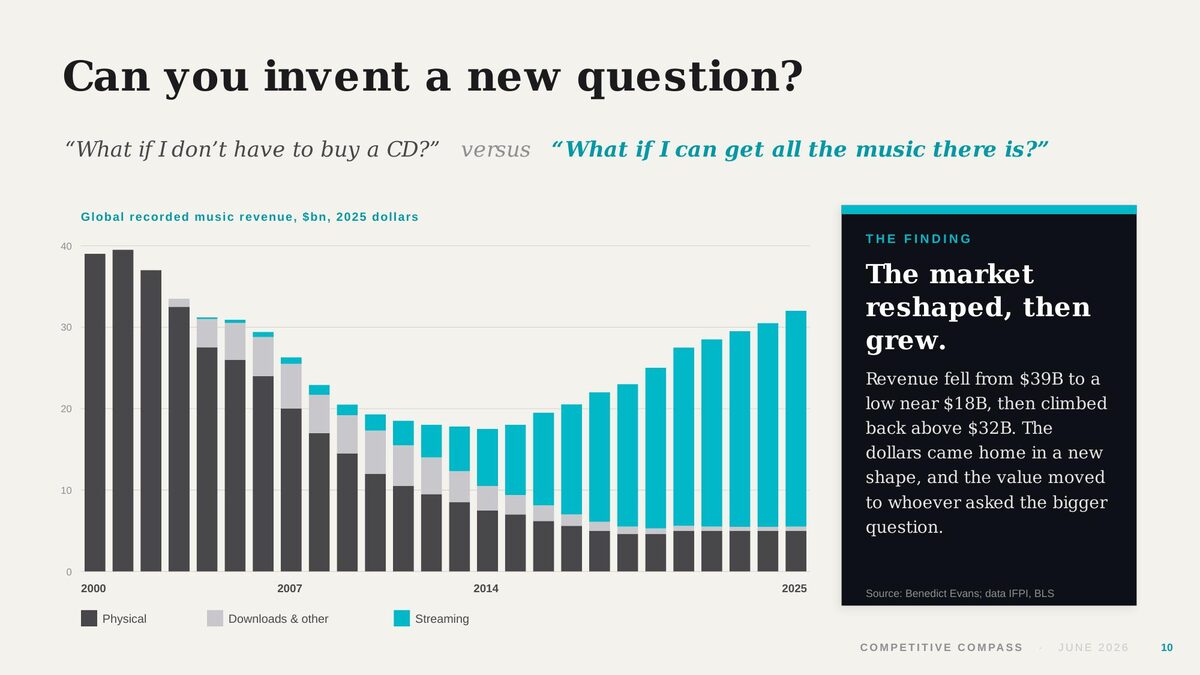
I believe retail banking is approaching its own version of that chart. The spending stays large and grows. The moment of choice simply shifts to the trusted answer, and the brand standing inside that answer inherits the demand. So, the work today, as I see it, is to read the curve early and move while it is still cheap.
I read the credit journey from only one perspective: the person holding the card. Half the country already asks a machine for help with a money decision. The youngest and most valuable buyers ask it first and trust it most, and the most profitable customer tends to move ahead of the average one. So the revenue crosses before the headcount does, which is exactly how the music market behaved. During the presentation, we review this generation by generation and income band by income band, and put a clock on it across the next six, twelve, and eighteen months.
A handful of cards can fit a wide range of people. You set the limit, rate, rewards, perks, and the fee to match each person, so the same card becomes the right card for a very different life. Understand the person, and the edge shifts from the product to the match. And there is a window open right now: consumers arrive before the marketing spend does, so attention is high while competition is light, and the early movers acquire at the lowest cost the channel will ever offer.
I find this next point the most convincing of all, because three separate lenses land on the same answer. The step change in music, the consumer data, and the classic test of where a moat lives all say the same thing: act now, and move faster than you are today.
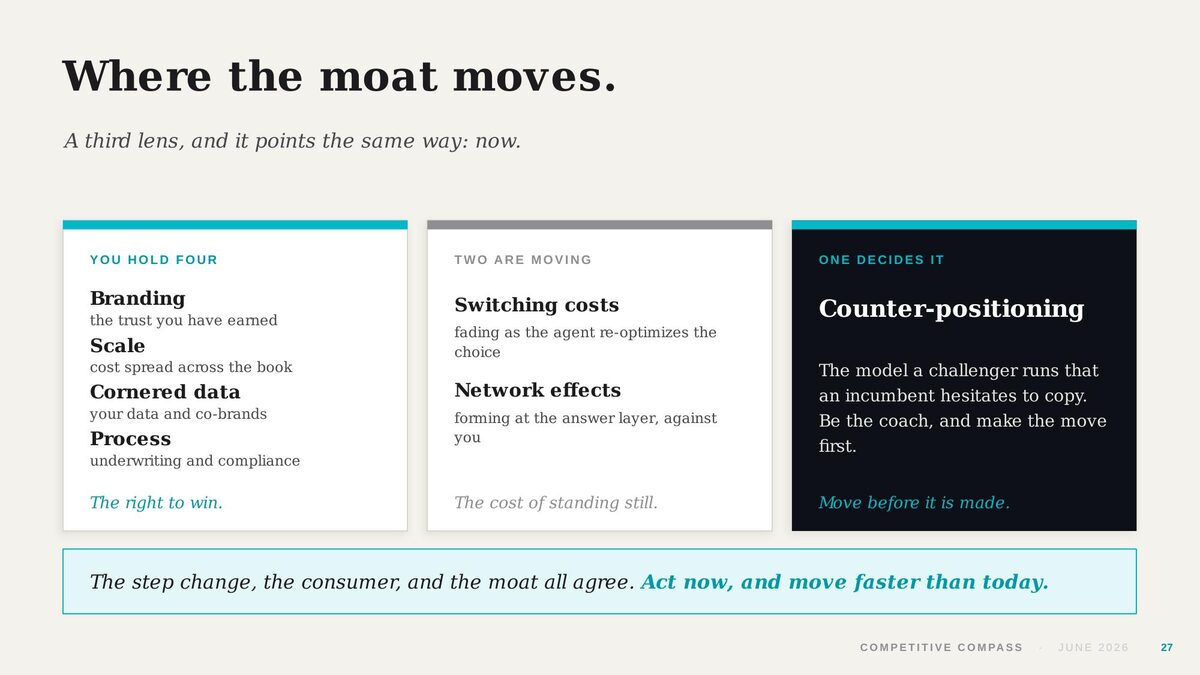
Twice in a generation, the path to a purchase was rewritten, and the brands that moved early led for a decade. The third rewrite runs through the answer, and it is open right now. This is the beginning, far from the end, so I would trust the questions over tidy answers.
Your customer is already starting the journey in a new place. The work is to be standing there, trusted, when they arrive.
Behind this edition sits a presentation I built for senior leadership teams, and I am sharing it with a select few. It goes well past what a newsletter holds, and it answers the questions above with the data and the moves laid out for your business. In 45 minutes, I walk your team through:
Reply to this note and I will hold a 45-minute slot for your senior team.