Competitive Compass COMPETITIVECOMPASS
Competitive Compass
COMPETITIVECOMPASS
Issue No. 327
Wednesday, October 28, 2026·4 minute read

The Second-Opinion
Generation.

Card issuers spent $7 billion last quarter on the first opinion. Gen Z gets a second one from an AI, for free, before they say yes.
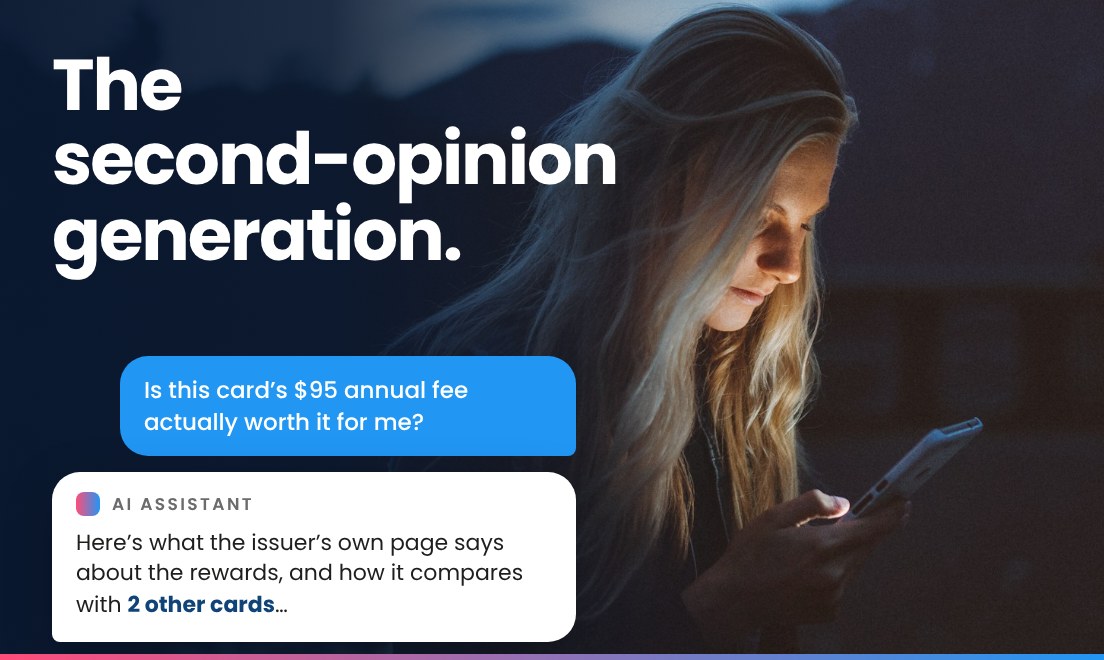
A young woman at dusk, her face lit by her phone. Beside her: The second-opinion generation, and a chat with an AI assistant. She asks whether a card’s $95 annual fee is worth it for her. The assistant answers with what the issuer’s own page says and how it compares with 2 other cards.
Credit Cards, US, 2026

72% of Gen Z say an AI helps them get more from a card

A year ago, I shared a number you asked me about more than any other. 62% of Gen Z and 60% of millennials started their credit card search with an AI.

This year, I wanted to know what happens once they have the card. Amr Hamdi’s new Credit Cards, US, 2026 report answered that. They keep asking.
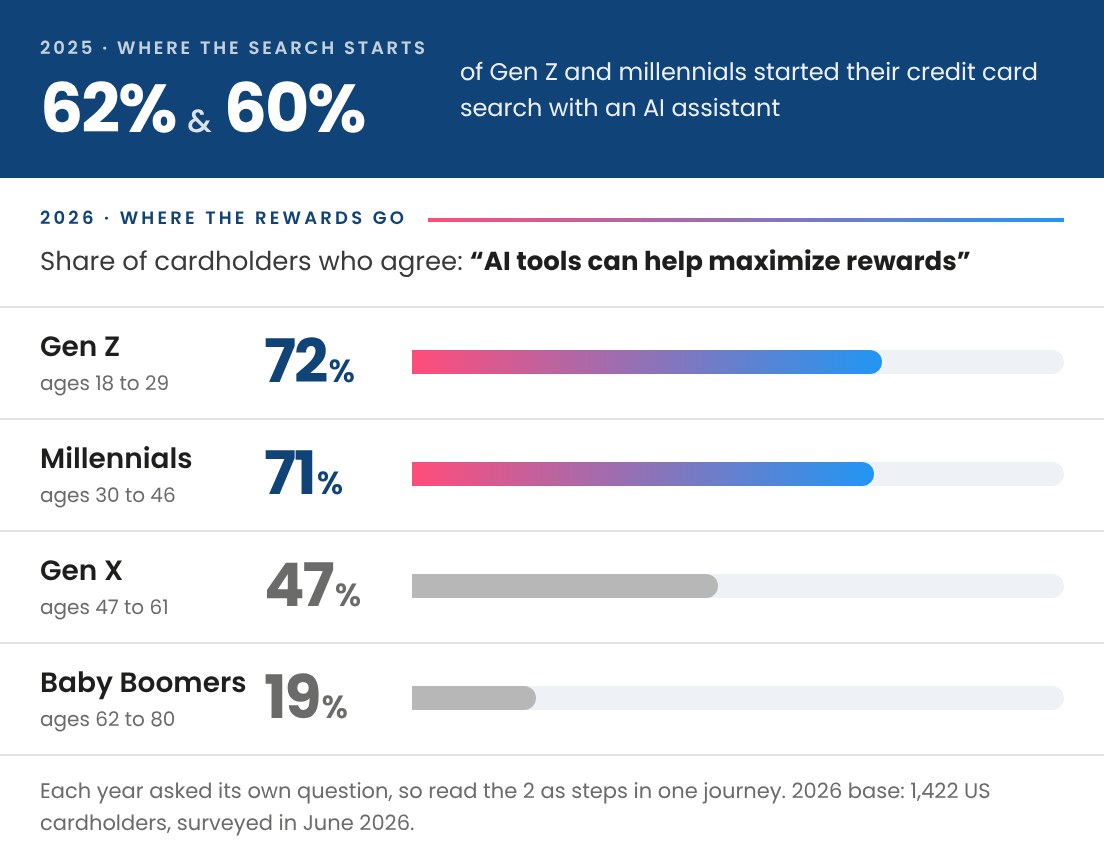
Exhibit 1US cardholders and AI, by generation
Gen Z and millennials agree at nearly 4 times the rate of Baby Boomers
2025: 62% of Gen Z and 60% of millennials started their credit card search with an AI assistant. 2026: share of cardholders who agree AI tools can help maximize rewards. Gen Z 72%, millennials 71%, Gen X 47%, Baby Boomers 19%. Base: 1,422 US cardholders, June 2026.
Source: Credit Cards, US, 2026; Credit Cards, US, 2025

Boomers built their banking habits at a branch counter. Gen Z is building theirs now, with a second opinion in every pocket.

Most of us get a second opinion when a decision matters: a diagnosis, a roof repair, a mortgage. Gen Z gets one for a $95 annual fee.

I mean that as a compliment. This is a smart, confident generation. They do their homework, and they spot a weak offer fast.

The takeaway

Gen Z checks the offer with an AI before they say yes. The cards that win look even better after the check.

In This Edition
01
Meet the second-opinion generation
02
What the first opinion costs
03
What the first opinion bought
04
Banks block AI agents at the login
05
The second opinion moves into the wallet
06
Our 2027 trends webinar, November 12
The first opinion

Issuers spent $7 billion making their own case in Q3

Every ad, mailer, and sponsorship is a bank giving its own opinion of itself. I added up what that cost last quarter at the 10 big issuers that report marketing on their own line.

About $76 million a day.
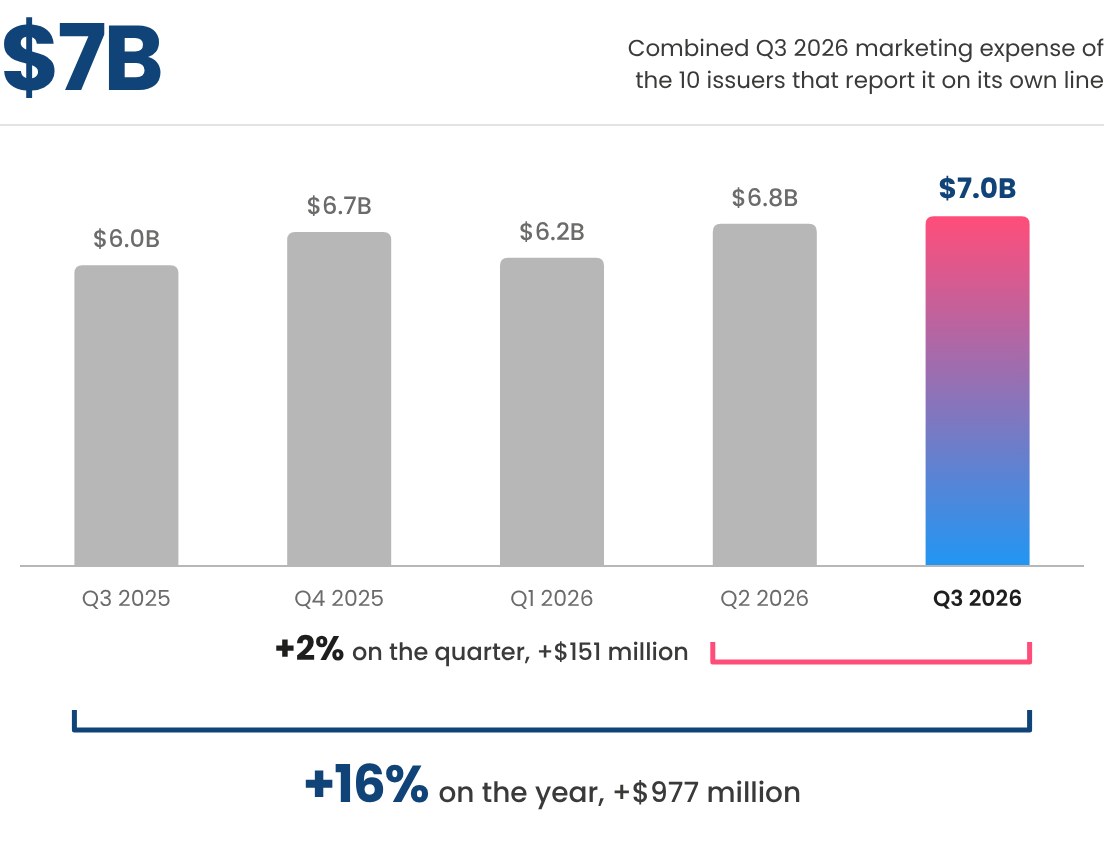
Exhibit 2Combined marketing expense, 10 issuers
Marketing grew 16% in a year and 2% in a quarter
Combined marketing expense of 10 issuers. Q3 2025 $6.0 billion, Q4 2025 $6.7 billion, Q1 2026 $6.2 billion, Q2 2026 $6.8 billion, Q3 2026 $7.0 billion. Up 2% on the quarter, $151 million. Up 16% on the year, $977 million.
Source: Q3 2026 earnings materials of JPMorgan Chase, American Express, Capital One, Bank of America, Wells Fargo, Citi, U.S. Bancorp, Synchrony, Truist, and Huntington. Competitive Compass analysis.

9 of the 10 spent more than a year ago. Chase grew the most. Its increase alone, $437 million, is more than 6 of the other 9 spent in the whole quarter.
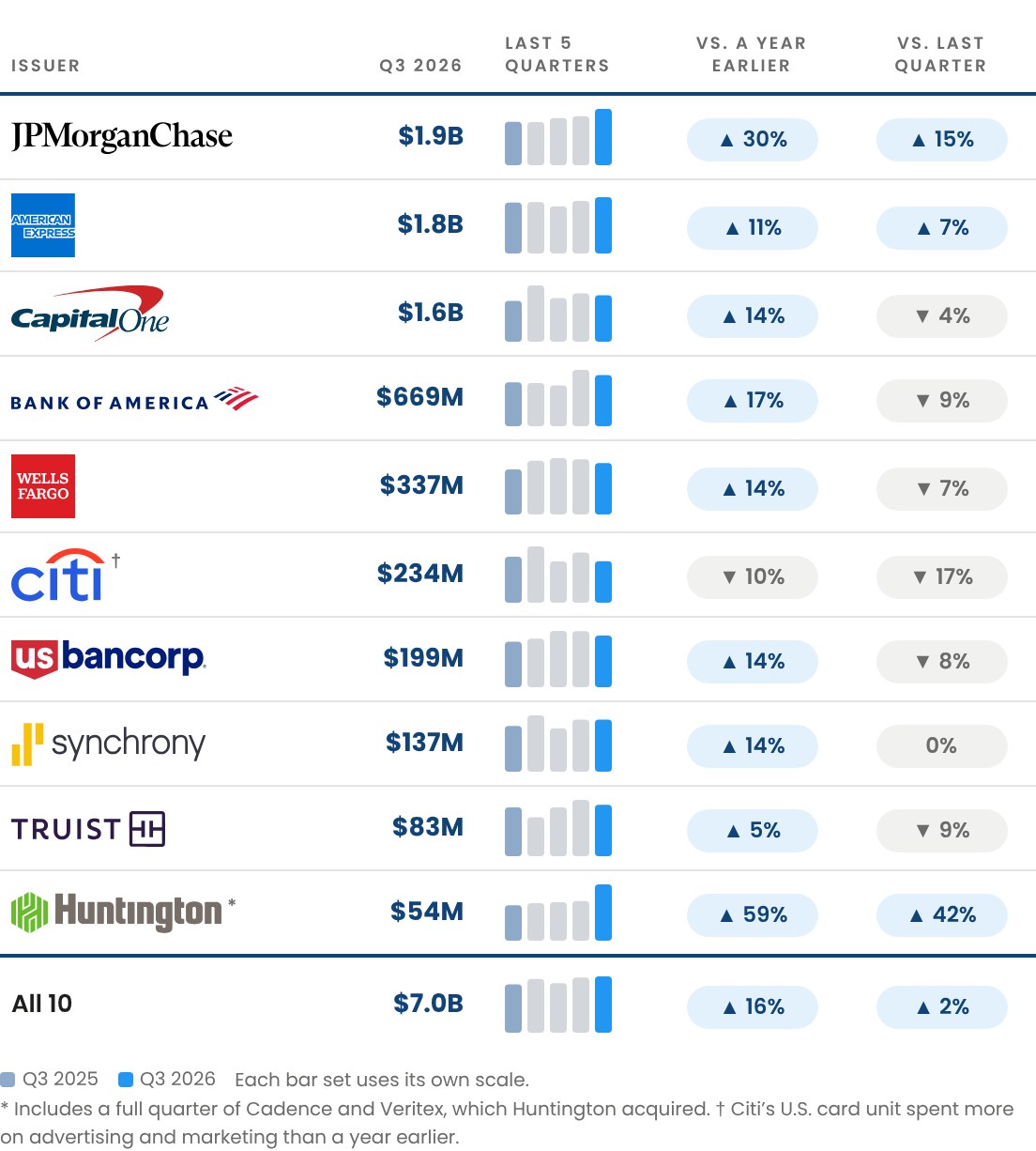
Exhibit 3Q3 2026 marketing expense, by issuer
JPMorgan Chase spent the most, $1.9 billion, up 30% in a year
Q3 2026 marketing expense by issuer, with change from a year earlier and from last quarter. JPMorgan Chase $1.9 billion, up 30% and up 15%. American Express $1.8 billion, up 11% and up 7%. Capital One $1.6 billion, up 14%, down 4%. Bank of America $669 million, up 17%, down 9%. Wells Fargo $337 million, up 14%, down 7%. Citi $234 million, down 10% and down 17%. U.S. Bancorp $199 million, up 14%, down 8%. Synchrony $137 million, up 14%, flat. Truist $83 million, up 5%, down 9%. Huntington $54 million, up 59% and up 42%, including acquired Cadence and Veritex. All 10: $7.0 billion, up 16% and up 2%.
Source: Q3 2026 earnings materials of the 10 issuers. Competitive Compass analysis.
What the first opinion bought

Chase added 650,000 checking accounts and credits its marketing

The first opinion still works. Here is Jeremy Barnum, Chase’s CFO, on the new customers:

“They’re responding well to the marketing.”

650,000net new checking accounts at Chase
1M+new card accounts at Bank of America
~660,000new credit card accounts at Wells Fargo
Source: Q3 2026 earnings calls and presentations of JPMorgan Chase, Bank of America, and Wells Fargo.

Bank of America spent more on new sponsorships and on relaunching BofA Rewards in May. Nearly 6 million clients have joined since then. Card spending at Capital One grew 11% to $254.7 billion.

Now look at who is signing up. Millennials and Gen Z account for 65% of new American Express consumer accounts. Gen Z card spending there grew 35% in a year.

The first opinion is winning the second-opinion generation.

The second opinion

Citi, Chase, and Bank of America limited AI agents in October

The second opinion comes before the login.

This month, 3 of the biggest banks moved to keep outside AI agents away from customer accounts.

These are sensible steps to keep money safe. The comparison shopping happens earlier, on public pages, before anyone logs in. Every bank can take part by publishing clear answers about its cards.

Some are already taking part:

The second opinion, inside the wallet

Breakage shrinks when an AI spends the points

Start with this number. 18% of struggling cardholders have left all their card’s rewards unused. For healthy cardholders, it is 4%.

Those unused points have a name. The industry calls it breakage, and some card programs are priced to count on it.

Now add the second opinion. 79% of Gen Z cardholders say it matters to pick a card for each purchase by its rewards. An AI that helps them do it will use those points for them.

So breakage shrinks, and real value wins. 75% of Gen Z say great benefits matter more than a low fee. 74% would rather have exclusive access than pile up points.

“Trust is clearly an asset, and we’ve spent decades building it.”

That was Barnum on why Chase feels good about its position.

I agree. Trust earns the first look. Real value is what the second opinion confirms.

The bottom line

Every issuer pays for the first opinion. Last quarter, it cost $7 billion, and it bought real accounts.

The second opinion is free. It comes from an AI the customer trusts. They ask it before they apply, and they keep asking once the card is in their wallet.

You can buy the first opinion. You have to earn the second.

Webinar · Thursday, November 12 · 1:00 PM ET

2027 Financial Services Trends & Implications

My colleagues Lierin Melvin, Patrick Rahlfs, and Andrew Davidson will share 3 trends for 2027: helpful money guidance, simpler products, and the people who build trust. They will also cover what changes as AI agents start acting for customers. Everyone who registers gets the report and the recording.

Save my seat
As ever,
Anuj
P.S.

This is my first edition from anuj@openbrand.com

Thank you to everyone who added the new address. If this edition reached your promotions folder, drag it to your primary inbox once, and the next editions follow it there.


Anuj Shahani
Anuj Shahani
EVP, Financial Services
anuj@openbrand.com·New York, NY
You are receiving this as part of a community of 17,000 financial services leaders building the industry’s future. Reply anytime. I read every response.
Forward this newsletter or sign a colleague up
Subscribe