876,000.
AI’s share of US card acquisition rose from 1.8% in Q4 2025 to 3.8% in Q1 2026. 876,000 cards in a single quarter, growing faster than any traditional channel ever did. Treat this less as a new channel and more as a new interface to the customer.
Where Q1 Cards Came From
Channel order tells a story this quarter. The familiar names still anchor the top of the leaderboard. The new name on the list is the one to watch. Marisa Frys added AI Tools to her channel mix this quarter. The growth rate is the signal she watched.
AI tools emerged as an early signal.
A Channel Becomes an Interface
One in 26 cards booked in Q1 was recommended by AI. The instinct is to file the line item under “performance marketing” and move on. The opportunity lies in recognizing that this is a net-new channel that doubled QoQ. AI is doing more than just joining the channel mix. AI is changing what a channel means.
I have shared these stats before. In June 2025, 33% of US consumers reported using AI tools to recommend a credit card for themselves. 62% of Gen Z. 60% of Millennials. The Q1 2026 Application Report confirms the pattern. AI applicants over-index on Bank of America and American Express, lean towards cashback, and reach the bank through more varied paths beyond pure digital. The early signal is small. The trajectory is what matters.
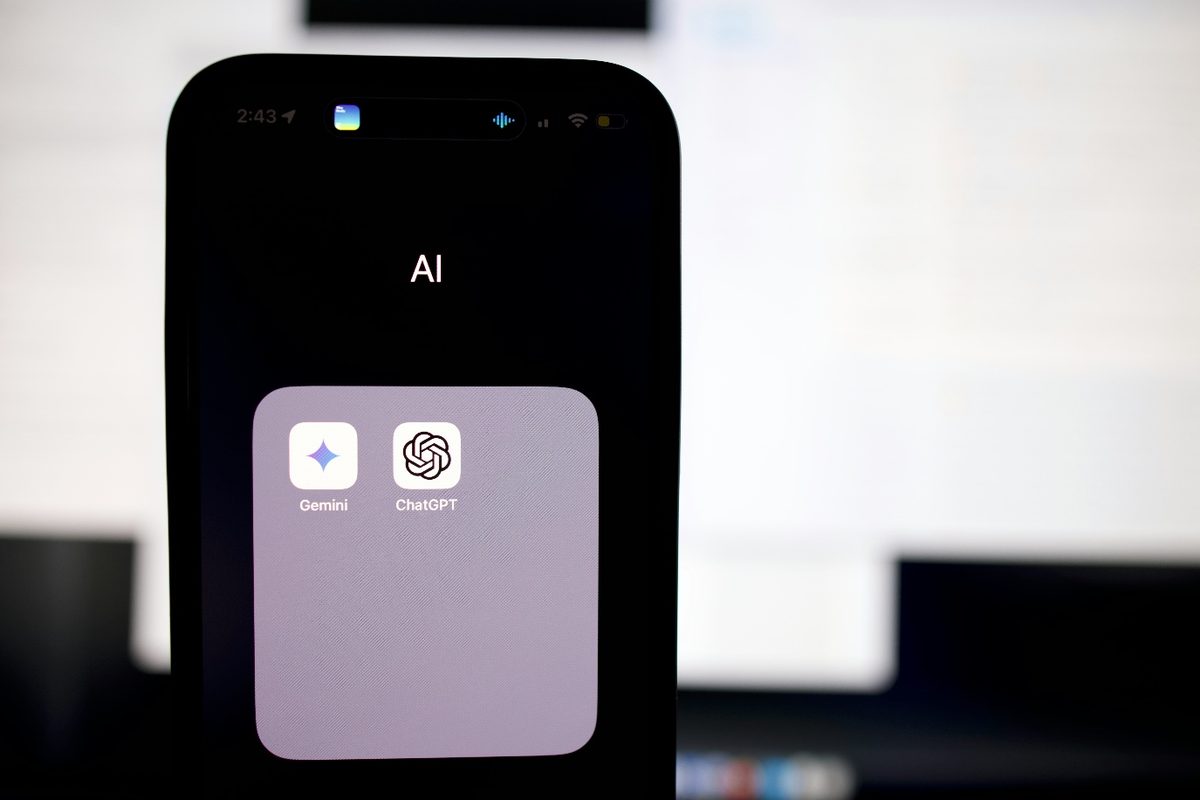
The product comparison, the rate check, and the “should I” question now happen inside the assistant. The bank still books the account. The decision about which bank to book it with was made upstream. The customer arrived already decided.
The US consumer now has PhD-level intelligence at their fingertips. The next click belongs to whoever earned the assistant’s confidence.
Who Is Winning the AI Moment?
The leaderboard inside the AI channel is already taking shape.
Bank of America
BofA has embraced the AI moment more aggressively than most, leading the AI tool application channel with a 28.8% share. They simultaneously lead in phone (22.2%) and social media (31.9%) applications.
Capital One
Capital One maintained its total volume lead in Q1 2026, driven by an email channel that reached a three-year high. By pairing “100% certainty” of approval in digital messaging with 0% APR “pre-approval” mailers, they have effectively lowered the psychological friction of the application process.
American Express & Chase
Both issuers are leaning into travel aspiration. Amex captured 22.8% of the AI recommendation market (second only to BofA), pivoting its mix back toward points and cashback. Chase moves ahead of Capital One to become the third-largest issuer in the in-person channel.
For the C-Suite of an FI
The number 876,000 looks different on each side of the corner office. The CMO sees a pipeline shift. The CFO sees a unit-economics shift. The CEO sees a distribution shift. All three are correct.
Win share inside the model, the way you used to in search.
Brand discovery is moving up one layer. The shopper now reads the assistant’s recommendation, then verifies. The work shifts from SEO to GEO, from page rank to model rank. Share of voice gets joined by share of model.
Audit how each major model describes your card today against the top three competitors. Treat that audit like a brand-track.
Re-price acquisition. The cheapest channel just appeared.
AI-routed acquisitions arrive without paid-search bid pressure, without direct-mail postage, and often with a customer who has already self-qualified. Early signal points to a meaningfully lower CAC than the historical mix. Affiliates and FI published content can make a big impact.
The harder question is approval and risk. A pre-decided customer behaves differently. Do we need to give them a large sign-up bonus? What is the quality of this customer? Do we need to understand these acquisitions better?
Decide whether the assistant is your ally, your channel, or your competitor.
Three different operating models. As an ally, you co-build. As a channel, you negotiate placement, fees, and data. As a competitor, you build the assistant yourself or partner with someone to control it. Each path implies different capex, different talent, and a different three-year roadmap.
The choice gets harder the longer you defer it.
Five Questions for the Next SLT
- If 3.8% becomes 15% by Q4 2027, which two of our paid channels lose budget first, and who on the team leads that reallocation?
- What does our card look like inside the top three assistants today, and who owns that real estate the way someone owns the homepage?
- When the customer arrives pre-qualified by an AI, does our underwriting model treat them as more or less risky, and have we measured the difference?
- If an assistant routes the customer based on rate, perks, and trust, which of those three are we most ready to defend?
- What is the one product feature we would build today that only matters if AI is the customer’s first stop?
876,000 is a leading indicator, not a closing one. The doubling in 90 days matters more than the absolute number, and the doubling will continue.
Move now. Audit your share of model. Re-price the AI cohort. The institutions that act in the next two quarters compound. The institutions that wait become a routing decision inside someone else’s product.
Citi rebuilds cards around the affluent customer and AI
Citi held its first investor day in four years and used it to reposition the cards franchise around premium and co-brand growth. Pam Habner, head of US Consumer Cards, framed AI as offense rather than cost-cutting. CEO Jane Fraser put it bluntly: “We rebuilt the engine.”
- Cards mix shift. General-purpose cards now drive 92% of spend, up from 89% in 2022. Private-label exposure stepping down.
- Affluent tilt. Customers earning over $150K have increased by more than 600 basis points since 2022. American Airlines and Costco partnerships called out as pillars of the “virtuous cycle.”
- AI as operating layer. Pam pointed to AI underwriting that lifted approval rates inside the existing risk frame, plus an agentic-commerce vision: an AI agent that rebooks a canceled flight and pays with the right Citi card.
- Wealth + AI. Andy Sieg announced partnerships with Google and Palantir to build “an autonomous intelligence system that delivers personalized insight 24/7 at scale.”
- Profitability targets. ROTCE of 11–13% in 2027–28, stepping to 14–15% by 2029–31. Q1 2026 already came in at 13.1%, on a 42% profit jump and the best quarterly revenue in ten years.
Anthropic ships 10 pre-built AI agents for the workflows banks spend the most hours on
At a closed-door briefing in New York, Anthropic launched 10 pre-built AI agents designed for the most labor-intensive workflows in finance: pitchbooks and earnings analysis, credit memos, underwriting, KYC, month-end close, statement audits, and insurance claims. The company also debuted Claude Opus 4.7, its most capable model for finance work yet, and announced a private-equity-backed JV to embed Claude into mid-market institutions.
The signal worth holding onto: the agentic stack graduated from pilot to product. The work that once defined a 30-person analyst pod now ships as a configurable agent.